Friday, December 5, 2025

Breaking News | Finance | Business | Market
Breaking News | Finance | Business | Market
On Tuesday, November 18, 2025, in Los Angeles, Los Angeles Lakers forward LeBron James (23) reacts to a three-point basket made by guard Gabe Vincent during the second half of an NBA basketball game against the Utah Jazz.
San Francisco — In a move that may allay recent concerns about a Big Tech boom turning into a crash that brings down the most valuable corporation in the world, Nvidia's sales of the computing chips driving the artificial intelligence mania surged above the high bar set by stock market analysts.
Since OpenAI released its ChatGPT three years ago, the stock market and a large portion of the economy have been driven by the feverish expenditure on AI technology. The results, which were disclosed late on Wednesday, provide a pulse check on this trend.
Since its processors are now essential for constructing the AI factories required to enable what is expected to be the most significant technological advancement since Apple introduced the iPhone in 2007, Nvidia has been by far the biggest benefactor of the run-up.
However, there has been a growing sentiment over the past few weeks that the high expectations for AI may have become far too frothy, laying the groundwork for a startling decline that could be just as dramatic as Nvidia's rise from less than $400 billion three years ago to $4.5 trillion at the end of Wednesday's trading.
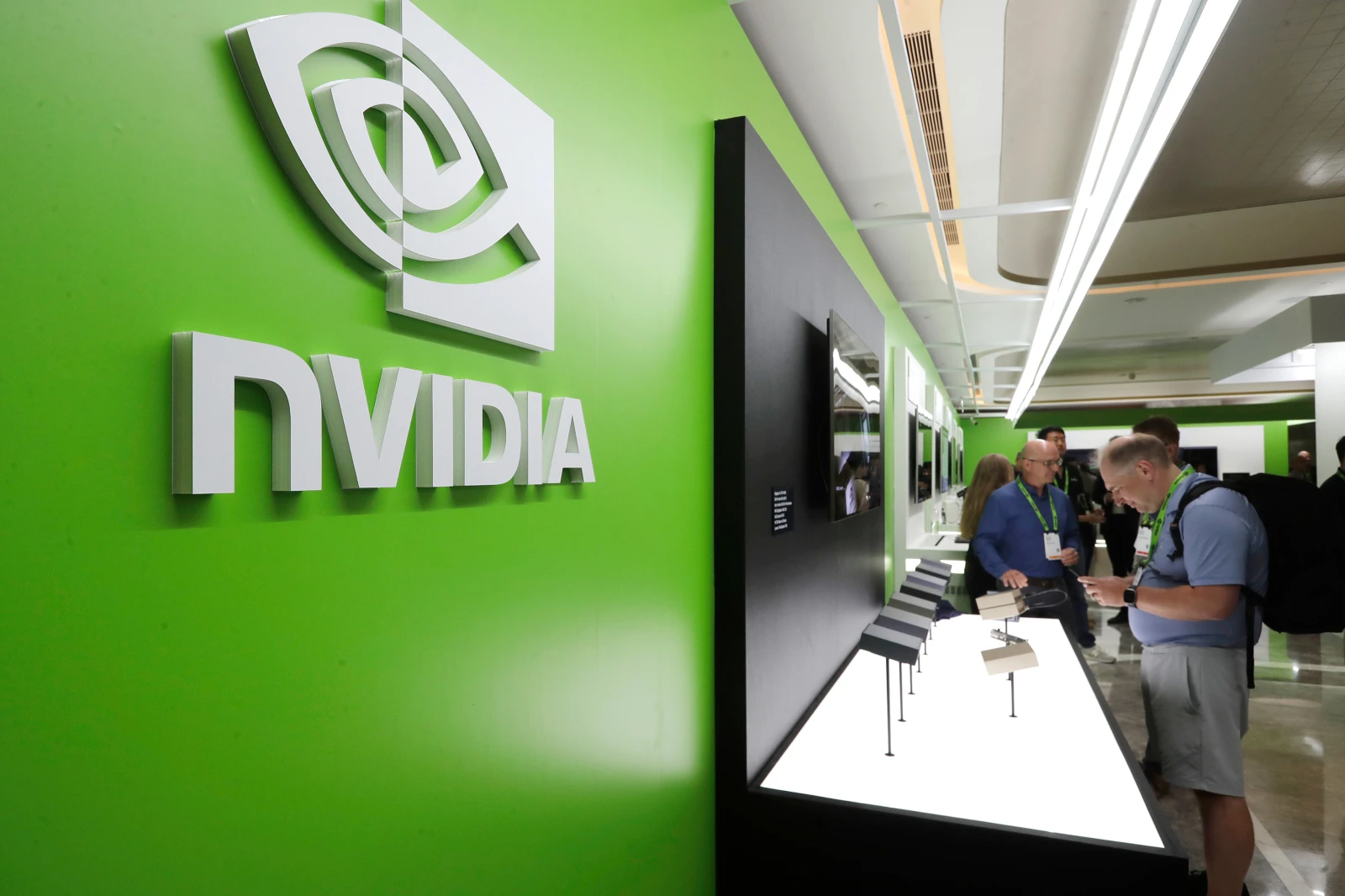
Those who were worried about a worst-case scenario were relieved by Nvidia's report for its fiscal third quarter, which covered the August–October period. It may also assist reverse the recent stock market decline.
According to Sean O'Hara, president of the investing firm Pacer ETFs, "the market should belt out a heavy sigh, given the skittishness we have been experiencing."
On January 2, 2024, a drone attack on a southern suburb of Beirut killed Saleh Arouri, the deputy political leader of Hamas and a pioneer of the organization's military arm. Since then, strikes have killed a number of additional Hamas officials.
While revenue increased 62% to $57 billion, Nvidia made $31.9 billion, or $1.30 per share, a 65% gain over the same period last year. Earnings of $1.26 per share on $54.9 billion in revenue were predicted by analysts surveyed by FactSet Research. Additionally, the Santa Clara, California-based company projected that its sales for the current quarter, which runs from November to January, will be around $65 billion, almost $3 billion more than analysts had forecast. This suggests that demand for its AI processors is still quite high.
In a prepared statement, Nvidia CEO Jensen Huang hailed the current state of the market as "a virtuous cycle" and stated that inbound orders for the company's flagship Blackwell processor are "off the charts." Nvidia Chief Financial Officer Collette Kress stated during a conference call that the business would have sold over $500 billion in chips made for AI factories in a 24-month period by the end of next year. Kress also projects that trillions of dollars more will be spent by the end of the 2020s.
Huang used the preamble of a conference call, which has turned into a State of the AI Market speech, to refute those who question his claim that technology is approaching a tipping point that will change the world. "The idea of an AI bubble has been discussed extensively. Huang emphasized, praising the "depth and breadth" of Nvidia's expansion, "from our vantage point, we see something very different."
Although the White House's trade war has hindered Nvidia's ability to sell its chips in China's lucrative market, Huang has used this position to forge close ties with President Donald Trump. The positive results, optimistic commentary, and ensuring reaction reflect the crucial role that Nvidia is playing in the future direction of the economy.
In order to achieve his economic goals, Trump is depending more and more on the IT industry and the advancement of artificial intelligence. Despite Trump's assertions that his tariffs are attracting new investments, a large portion of that foreign money is going to data centers for AI's processing needs or the power facilities required to operate those data centers.
Regarding Nvidia, Jay Woods, chief market strategist at investment bank Freedom Capital Markets, remarked, "To say this is the most important stock in the world is an understatement."
Not just Nvidia, which a few weeks ago became the first business to surpass a $5 trillion market valuation before the latest bubble concerns led to a more than 10% dip, has benefited from the surge. Their profits have also been skyrocketing as OpenAI and other Big Tech giants acquire Nvidia's processors to construct their AI factories and invest in other services related to the technology. The market values of Apple, Microsoft, Alphabet Inc., the parent company of Google, and Amazon are all between $2 and $4 trillion.

Deann L. Almond focuses on Entertainment trends, analyzing how business, sports, and market developments affect regional and global economies.







.webp)