Friday, December 5, 2025

Breaking News | Finance | Business | Market
Breaking News | Finance | Business | Market
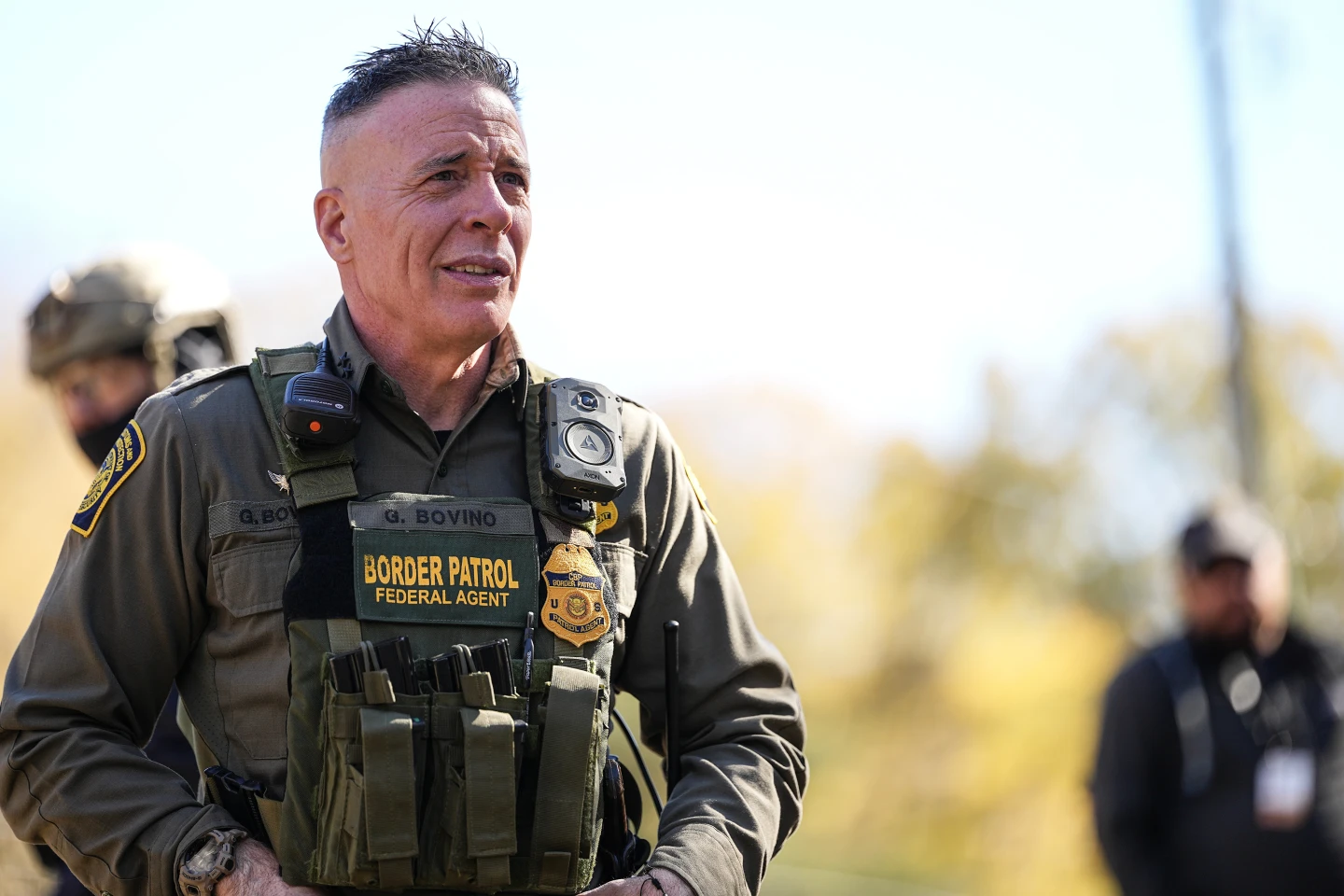
2025, in Charlotte, North Carolina, U.S. Border Patrol Commander at Large Gregory Bovino observes.
NEW ORLEANS — According to documents obtained by The Associated Press and three people familiar with the operation, about 250 federal border agents are scheduled to arrive in New Orleans in the upcoming weeks as part of a two-month immigration crackdown known as "Swamp Sweep," which aims to arrest about 5,000 people throughout southeast Louisiana and into Mississippi.
The deployment, which is scheduled to start in earnest on December 1, is the most recent intensification of a string of swift immigration crackdowns that are taking place across the country, from Chicago to Los Angeles to Charlotte, North Carolina, as the Trump administration works hard to carry out the president's campaign pledge of mass deportations.
The operation is taking place in Louisiana, the home state of Republican Governor Jeff Landry, a staunch Trump friend who has taken steps to align state policy with the enforcement agenda of the White House. However, a confrontation with leftist New Orleans leaders who have long opposed federal sweeps could result from enhanced federal police presence, as has been observed in other blue cities located in Republican-led states.
The Border Patrol commander chosen to oversee the Louisiana sweep, Gregory Bovino, has emerged as the administration's preferred planner for widespread immigration crackdowns and has drawn criticism for the strategies employed in them. His appointment to supervise "Swamp Sweep" indicates that Louisiana is a top enforcement focus for the Trump administration.
Regarding the operation, the Department of Homeland Security declined to comment. "We're not going to telegraph potential operations for the safety and security of law enforcement," spokesman Tricia McLaughlin stated.
A federal judge in Chicago gave Bovino a rare public reprimand, accusing him of misleading the court about the dangers presented by demonstrators and using pepper balls and tear gas without cause during a tumultuous altercation downtown. In addition, his teams were in charge of aggressive arrest operations in Los Angeles and, more recently, Charlotte, where Border Patrol officials reported dozens of arrests throughout North Carolina this week following an intensifying immigration crackdown in which federal agents searched churches, supermarkets, and apartment buildings.
From New Orleans through Jefferson, St. Bernard, and St. Tammany parishes, as well as as far north as Baton Rouge, Border Patrol teams are getting ready to fan out across neighborhoods and commercial hubs throughout southeast Louisiana, with additional activity planned in southeastern Mississippi, according to planning documents examined by the show.
According to those familiar with the operation, agents are scheduled to arrive in New Orleans on Friday in order to start staging vehicles and equipment before to the Thanksgiving break. The entire sweep will start in early December, and they are expected to return by the end of the month. The sources with knowledge of the situation spoke to the FISCAL FUSION under the condition of anonymity because they were unable to disclose specifics of the operation in public.
Federal officials are establishing a network of staging locations to facilitate an operation of that magnitude: According to the persons, a naval facility five miles south of the city will house trucks, equipment, and thousands of pounds of "less lethal" weapons like pepper balls and tear gas, while a section of the FBI's New Orleans field office has been designated as a command center. According to documents seen by the FISCAL FUSION, Homeland Security has also requested to use the Naval Air Station Joint Reserve Base New Orleans for up to 90 days starting this weekend.
Louisiana will serve as a key testing ground for the administration's growing deportation plan once "Swamp Sweep" gets underway. It will also serve as a focal point for the growing divide between federal authorities who want to make widespread arrests and local politicians who have long opposed them.







.webp)