Friday, December 5, 2025

Breaking News | Finance | Business | Market
Breaking News | Finance | Business | Market
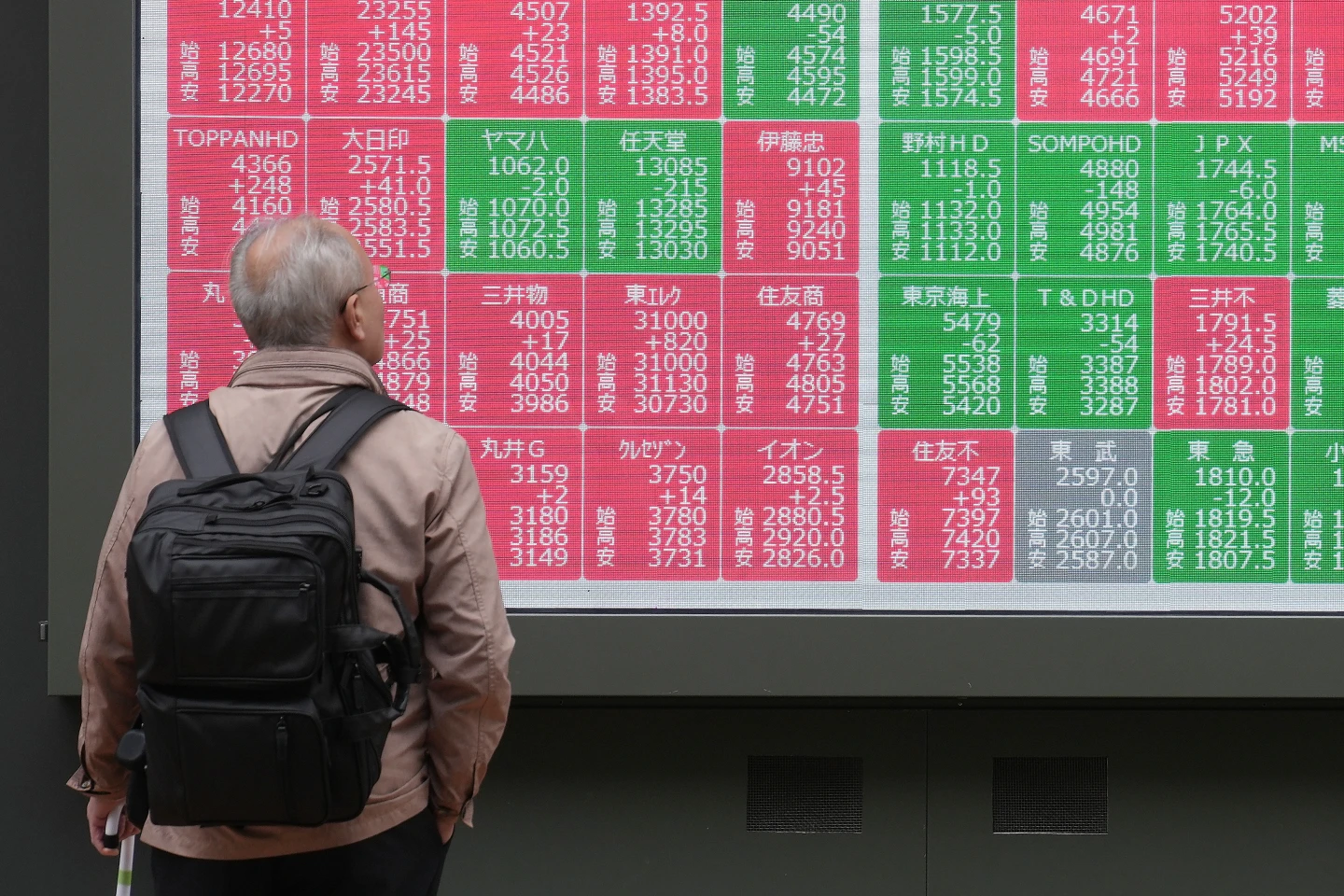
A person looks at an electronic stock board showing Japan’s Nikkei index at a securities firm Tuesday, Nov. 25, 2025, in Tokyo.
Bangkok — After U.S. equities surged on Tuesday due to expectations that the Federal Reserve will soon lower interest rates, most Asian markets saw gains.
Oil prices dropped along with U.S. futures.
After reopening from a holiday, Tokyo's Nikkei 225 was almost unchanged at 48,628.85.
The market was impacted by a decline in the stock of technology behemoth SoftBank. It dropped 10.3% due to worries that Google's next-generation Gemini artificial intelligence model, which was introduced last week, would jeopardize the profits from its significant investments in OpenAI.
The Kospi increased 0.3% to 3,859.12 in South Korea. The Taiex in Taiwan increased 1.5%.
Chinese markets improved as well. The Shanghai Composite index increased 0.9% to 3,872.45 in Hong Kong, while the Hang Seng increased 0.4% to 25,821.47.
On one of its best days since the summer, the S&P 500 increased 1.5% to 6,705.12. The Nasdaq composite increased 2.7% to 22,872.01, while the Dow Jones Industrial Average increased 0.4% to 46,448.27.
Growing expectations that the Fed would lower its primary interest rate once more at its upcoming meeting in December, which might support the economy and investment prices, gave stocks a boost.
Strength for stocks enmeshed in the artificial intelligence mania also helped the market. One of the biggest factors boosting the S&P 500 was Alphabet, which saw a 6.3% increase and has been praised for its latest Gemini AI model. Nvidia increased by 2.1%.
Monday's advances came after significant fluctuations in previous weeks, both day-to-day and hour-to-hour, brought on by uncertainty about the Fed's interest rate policy and if excessive investment in AI is creating a bubble. The toughest test for investors since a sell-off in April, when President Donald Trump stunned the globe with his "Liberation Day" tariffs, is being created by all the concerns.
The S&P 500 is still within 2.7% of its record established last month, despite all the current anxiety
This week will see a number of market tests. The U.S. government will release data on wholesale inflation in September on Tuesday, which will be one of the largest.
According to economists, prices will have increased by 2.6% from a year ago, just like they did in August. Since lower rates might exacerbate inflation, a higher-than-expected figure may prevent the Fed from lowering its primary interest rate in December for the third time this year. Because inflation has persistently stayed above their 2% objective, some Fed members have already argued against a December decrease.
However, according to statistics from CME Group, traders are wagering on a roughly 85% chance that the Fed will cut rates next month, up from 71% on Friday and less than a coin flip's chance a week ago.
U.S. benchmark crude oil dropped 25 cents to $58.59 a barrel in other transactions early on Tuesday. The global benchmark, Brent crude, dropped 30 cents to $62.42 a barrel.
The dollar dropped from 156.91 Japanese yen to 156.70 yen. The euro fell from $1.1521 to $1.1517.
At $88,100, Bitcoin dropped 1.1%. Last month, it was close to $125,000.

Deann L. Almond focuses on Entertainment trends, analyzing how business, sports, and market developments affect regional and global economies.








.webp)