Friday, December 5, 2025

Breaking News | Finance | Business | Market
Breaking News | Finance | Business | Market
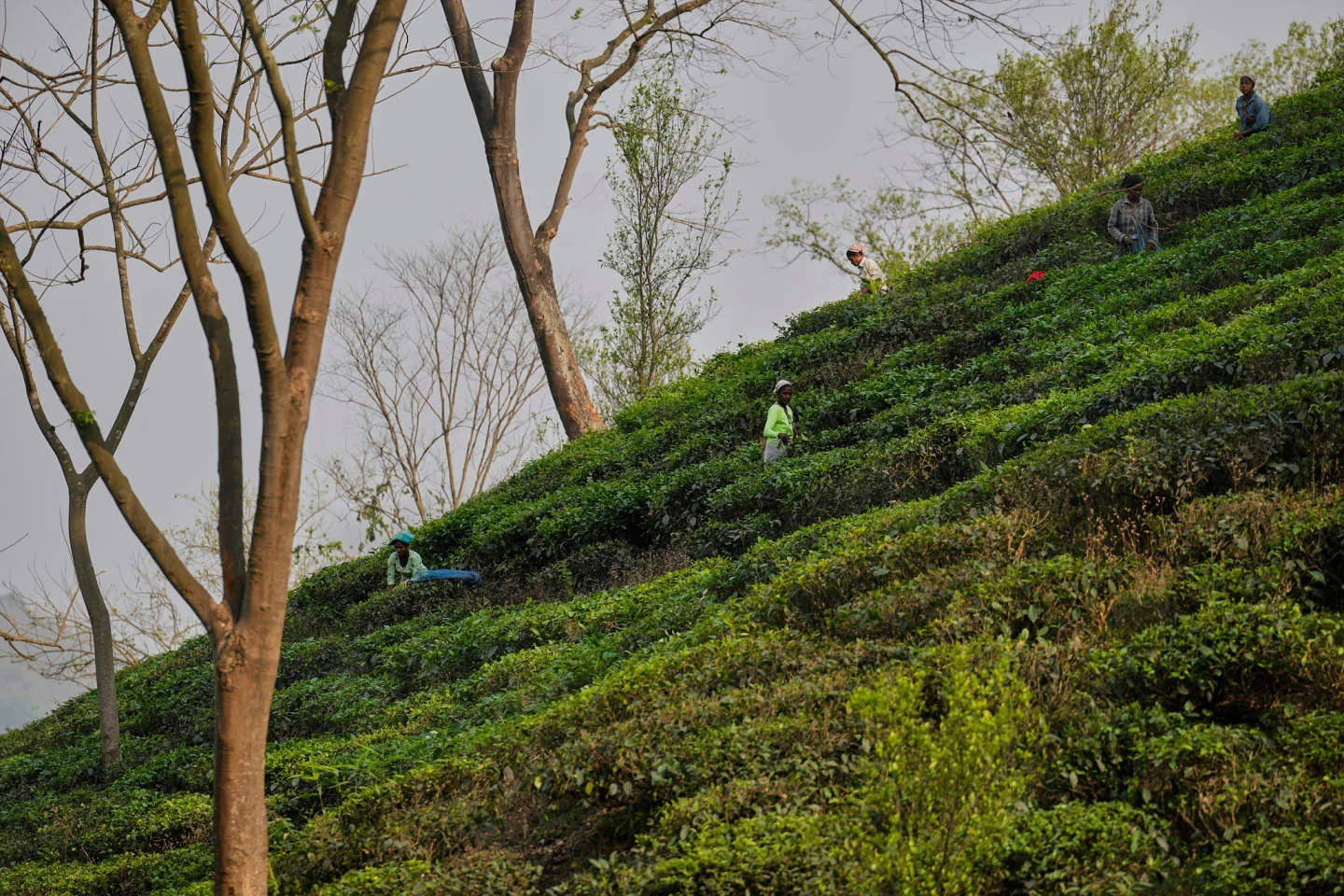
Women labourers pluck tea leaves in a tea garden on the outskirts of Guwahati, India, Wednesday, April 9, 2025.
New York — Once, a tea tax led to an uprising. It's only giving me headaches this time.
President Donald Trump's tariffs have caused prices to rise, orders to stagnate, and margins to contract for importers of the valuable leaves. Tea dealers claim that even though Trump has granted them a reprieve, the harm won't be immediately undone.
Bruce Richardson, a renowned tea expert, tea historian, and distributor at his store, Elmwood Inn Fine Teas, in Danville, Kentucky, says, "It took a while to work its way through the system, these tariffs, and it will take a while for it to work its way out of the system." "That tea that was tariffed is still making its way out of our storage facilities."
The largest supermarket brands are owned by a few larger companies, but the premium tea market is mostly run by smaller companies, including family farms, specialized importers, and a network of tiny tea shops, tea rooms, and tea cafés throughout the United States. In the midst of a barrage of tariffs, they have turned into demonstrations of the consequences of the levies.
The assortment on their shelves has shrunk, and some teas are no longer available because they are no longer profitable to stock with high taxes. Managers are plagued by uncertainties and operational challenges in their warehouses, such as figuring out the true cost of a blend using goods from several nations on a tariff roller coaster. Additionally, owners have been compelled to postpone job listings, raises, advertising, and other investments in backrooms where the aroma of fresh tea permeates in order to have cash on hand to pay charges when their containers arrive at U.S. ports.
The owner of the Mark T. Wendell Tea Company in Acton, Massachusetts, Hartley Johnson, says, "If I were to add up all the money I've spent on tariffs that weren't there a year ago, it could equal a new employee."
In the past, Johnson's prices would remain unchanged for a year or more. Before he had to react, he ate the tariff expenses. Hu-Kwa, a smokey Taiwanese tea that is his favorite, has consistently increased in price from $26 to $46 per pound.
He is aware that some clients are changing their minds.
"What is the tipping point?" Johnson queries. "I feel like the tipping point is happening right now."
Even though Trump removed some agricultural product tariffs this week, many in the tea industry warn tea lovers not to celebrate too soon. Since a large portion of the supply for next year has already been imported and subject to tariffs, it's possible that the full effects of those charges haven't yet been felt
Other tariff-driven price increases continue in the interim. Other goods that tea companies buy, such as infusers and teapots, are still subject to taxes, and the price of some American-made goods, such as packing tins, has increased due to their reliance on imported materials.
"Tariffs have affected everything we import and sell, including canisters, bamboo boxes, matcha whisks," says Gilbert Tsang, the proprietor of MEM Tea Imports in Wakefield, Massachusetts.
Gilbert Tsang, the owner of MEM Tea Imports in Wakefield, Massachusetts, states, "Tariffs have affected everything we import and sell, including canisters, bamboo boxes, matcha whisks."
Boston was born on tea, even though it now runs on Dunkin'.
The British Parliament's imposition of tea duties on colonists, who opposed taxation without representation in government, sparked the 1773 uprising that came to be known as the Boston Tea Party. Ironically, the Tariff Act of 1789, one of the first significant laws passed by the newly formed United States, imposed import taxes on a variety of goods, including tea. However, throughout time, trade policy began to incorporate carve-outs for a number of goods that Americans depend on but do not manufacture.
The majority of tea has been transported via American ports with little to no customs for more than 150 years.
Trump's tough stance toward China during his first term started to change that. However, nothing was comparable to what followed his return to the White House.
Tea was taxed at an average rate of more than 12% in July, the most recent month for which the U.S. International Trade Commission has calculated tariff figures. This represents a significant increase from less than a tenth of a percent a year earlier. In just 31 days, American companies and consumers spent almost $6 million in tea import duties in a single month, accumulating more tariffs than any prior complete year on record.
"Taxation without representation all over again," says Richardson, a consultant to the Boston Tea Party Ships & Museum. "Because Congress is avoiding the issue by simply allowing the president to act like George III, our needs, wants, and voices are not being represented."
In the first seven months of 2025, tea importers paid over $19.6 million in tariffs, which is almost seven times more than they spent at the same period the previous year.
For those who are familiar with the tea industry, it has all been confusing because the United States depends on other nations for almost all of the billions of pounds of tea that Americans brew annually. Even though there are many little tea plantations in the United States, they are only able to provide Americans' cups for a few hours each year.
According to Angela McDonald, president of the US League of Tea Growers, "we don't have an industry and we can't produce one overnight."
For some companies, such as Los Angeles-based International Tea Importers Inc., where duties caused an intolerable cash-flow bottleneck, Trump's suspension of tea tariffs came too late.
Trump's suspension of tea tariffs came too late for some businesses, like Los Angeles-based International Tea Importers Inc., where levies created an unbearable cash-flow bottleneck.

Deann L. Almond focuses on Entertainment trends, analyzing how business, sports, and market developments affect regional and global economies.









.webp)