Friday, December 5, 2025

Breaking News | Finance | Business | Market
Breaking News | Finance | Business | Market
Fed Chair Jerome Powell said there were “strongly differing views about how to proceed in December” at the next policy meeting and a further reduction in the benchmark rate is not “a foregone conclusion.”
New York — For the second time since September, the Federal Reserve lowered its benchmark interest rate by a quarter percent on Wednesday. It had not been cut for nine months prior to that.
The rate at which banks borrow from and lend to one another is known as the federal funds rate. Changes impact the rates you pay for credit cards, auto loans, mortgages, and other financial products, even if they are not directly related to the rates people pay to borrow money.
"Early indicators suggest that even modest rate cuts can have meaningful consequences for consumer behavior and financial health, even though the full economic impact of such a move will unfold over time," stated Michele Raneri, vice president and head of U.S. research at credit reporting firm TransUnion.
When it sets the rate, the Fed does so with two objectives in mind: first, to control prices for goods and services; and second, to promote full employment. Generally, the Fed may raise the rate in an effort to lower inflation and lower it in order to promote quicker economic expansion and more hiring. The current problem is that while the labor market has been poor, inflation is higher than the Fed's 2% target. Additionally, the government shutdown has hindered the gathering and dissemination of data that the Fed uses to track the state of the economy.
However, the Fed has predicted that it will lower rates again before the year is over.
Here's what you should know:
Falling interest rates will gradually reduce the alluring yields that high-yield savings accounts and certificates of deposit (CDs) currently provide for savers.
According to Ken Tumin, founder of DepositAccounts.com, two of the big five banks (Ally and Discover/Capital One) lowered their savings account rates following the most recent Fed rate decrease in September, and three of the top five high yield savings accounts saw rate reductions. The current top rates for high yield savings accounts are still between 4.46% and 4.6%.
These are still preferable to the current trends and a good choice for customers who wish to get a return on their investment in the near future. The annual percentage yield of a high yield savings account is typically significantly higher than that of a standard savings account. According to Bankrate, the current national average for traditional savings accounts is 0.63%.
According to Tumin, there might be a few accounts with returns of roughly 4% through the end of 2025, but the Fed cuts will trickle down to these offerings, bringing down the average yields in the process.
The market has already factored in the rate reduction for potential homebuyers.
In particular, mortgage rates have reacted quickly, according to Raneri. They hit their lowest point in more than a year only last week. much though mortgage rates don't always follow the Fed's target rate—they frequently factor in projected future rate reductions—the further easing of monetary policy may cause rates to drop much further.
Over time, borrowers will benefit somewhat from a lowering interest rate environment, according to Stephen Kates, a financial analyst at Bankrate.
"Lower rates can ease the burden on many indebted households by opening opportunities to refinance or consolidate, whether it's a homeowner with a 7% mortgage or a recent graduate hoping to refinance student loans and credit card debt," he stated.
Since the Fed increased its benchmark interest rate beginning in early 2022, Americans have had to deal with higher vehicle loan rates for the past three years. They are not anticipated to decrease in the near future. According to analysts, a cut will help provide relief eventually, but it may take some time.
"We might see lending margins start to shrink if the auto market freezes up and people aren't buying cars, but auto loan rates don't move in lockstep with the Fed rate," Kates stated.
Without accounting for inflation, new automobile prices are still at historically high levels.
An annual percentage rate for an auto loan typically ranges from 4% to 30%. The average interest rate on a 60-month new automobile loan is currently 7.10%, according to Bankrate's most recent weekly survey.
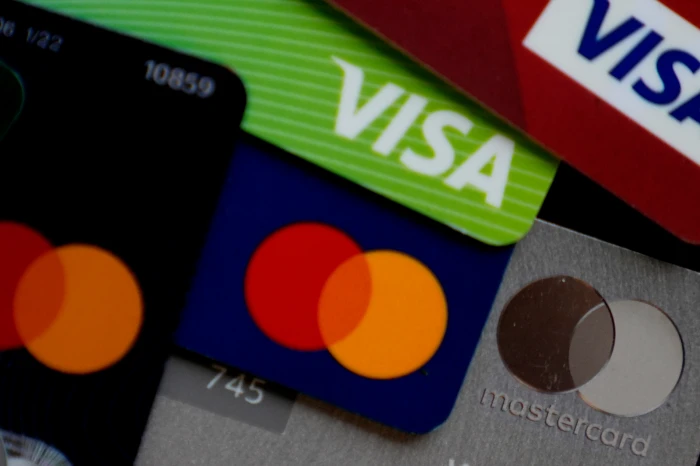
The average credit card interest rate right now is 20.01%, so somebody with a lot of credit card debt might not notice the Fed's rate drop right away. Nevertheless, any decrease is good news.
"Rate cuts offer a potential counterbalance by lowering debt servicing costs, even though inflation continues to put pressure on household budgets," Raneri stated.
Nonetheless, the best course of action for anyone with a sizable credit card balance is to make paying off high-interest debt their first priority. They should also try to transfer any money they can to cards with lower annual percentage rates or bargain directly with credit card firms for accommodations.
The Charles Schwab Foundation provides funding to the Associated Press for explanatory and educational reporting aimed at enhancing financial literacy. Charles Schwab and Co. is not affiliated with the independent foundation. Inc. The 's journalism is entirely its own responsibility.

James B. McWhorter covers the intersection of politics, and financial policy, with a focus on how global and regional developments shape markets and everyday life.









.webp)