Friday, December 5, 2025

Breaking News | Finance | Business | Market
Breaking News | Finance | Business | Market
Daily struggle to breathe in New Delhi’s dense winter smog
NEW DELHI — Residents of New Delhi claim that all they want is to be able to breathe clean air because the city has been covered in heavy levels of deadly pollution for almost two months.
Not only is the foul odor making their lives miserable, but the rising pollution is exacerbating a public health emergency. The National Capital Region, which is home to nearly 46 million people and includes New Delhi, has not been improved by government initiatives.
There is little real hope in this city despite the presence of Indian delegates at the international climate conference in Brazil, where envoys are attempting to discover measures to cut carbon emissions.
There hasn't been much of an impact from interventions like temporarily shutting down polluters and limiting the flow of cars through New Delhi, as well as more contentious techniques like cloud seeding. In one of the most polluted cities on earth, pollution impacts every facet of daily life throughout the winter.
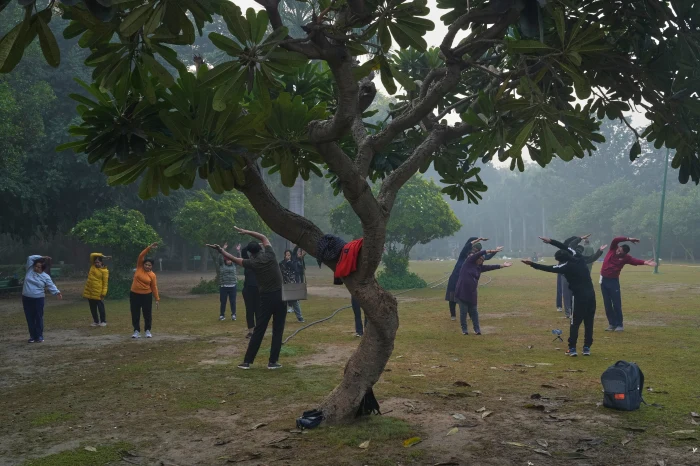
Like in other large cities, mornings begin with city workers cleaning the streets, commuters waiting at bus stations, and health-conscious people exercising alone or in groups in verdant local parks.
However, when pollution levels are high, health officials encourage individuals to minimize their outside activities because the risks of breathing the contaminated air exceed the advantages.
Many locals now claim that in order to prevent coughing fits, they stay inside and completely avoid taking morning walks.
Cars and other vehicles clog the main roads by midmorning rush hour, contributing to the gray cloud that hangs over the city with their exhaust emissions.
In an attempt to get the dust to settle, city officials have tried using water cannons to spray the roadways, but this method is limited to core areas and only works temporarily.
Residents of New Delhi have recently protested the government's inaction against rising pollution by taking to the streets, usually on weekend afternoons.
Protesters typically carry banners that proclaim, "Help us breathe," and wear gas masks.
Another rush hour occurs at the conclusion of the workday, when the risks of returning home are increased by poor visibility.
People meander through the famous Delhi center, which is home to landmarks like the India Gate, or buy at markets as the day comes to an end.
However, even a leisurely walk raises awareness of the pollution, which frequently obscures nearby buildings.
At last, the city is silent. Although air purifiers in houses put up a lot of effort, they frequently fail to remove all pollutants, depriving occupants of clean air.
Renuka Jasra remarked, "The past two months have been miserable." In the southern section of the city, the 54-year-old teacher resides in a modest ground-floor flat. "I had to seek medical attention because I have trouble breathing."
There is also no break for people who take walks at night.
"Even masks don't seem to work," stated 35-year-old Akshay Savoor. "Even when covered up, a burning smell comes through."








.webp)